

Wednesday, October 9, 2013
Working on a New and Improved Wash Station


Sunday, September 8, 2013
It may seem like summer is over - Labor Day has come and gone, the kids are back at school, and you may need a sweater in the evenings - but local farms are still producing fabulous summertime treats.


Mexican sour gherkins (also known as sanditas) are tiny bite sized cucumbers that look like little watermelons. Cut them in half and mix them with some halved cherry tomatoes, chopped onion, fresh cilantro, and a little lime juice and you have yourself a delicious summer salad. Enjoy!
Thursday, August 1, 2013
We've Been Busy
There's a lot going on at Windfall Farms lately. The farm has gone through many changes over the years but we have a lot of really exciting stuff happening right now. We are working with Orange County Land Trust (OCLT) to try and preserve our land. FARMroots has accepted us into their Intensive Technical Assistance Program (ITAP). We are experimenting with ideas and recipes in our Commercial Kitchen and our Carriage House is getting some much needed repairs.
 |
| historic carriage house will be safe & sound |
 |
| preserving the harvest |
We have more fencing than ever, more acreage planted than in previous years, and lots of new permanent plantings like fruit trees and berries. We also have some new toys to make things a bit easier. We will keep you posted on our progress and all of the new projects we have planned.
 |
| for those trips to the top field |
 |
| everything is going on pallets |
Friday, June 28, 2013
Help Cayuga Pure Organics Rebuild After Fire
Help Cayuga Pure Organics, An Organic Non-GMO Farm, Rebuild After Fire
Fellow Union Square Greenmarket farm, Cayuga Pure Organics, can really use your help right now. Their beanery burnt down in a fire and they are trying to raise money in order to rebuild. If you have an extra couple of bucks (or couple of thousand), they are a wonderful farm in need of your support.

Friday, February 10, 2012
Winter Greens at Greenmarket
Just a lil' online piece featuring lil' Ben. I think the author would have devoured him even faster than our sunflower greens . . . wouldn't you?

Wednesday, November 30, 2011
Orange County Farming Neighbor, Cheryl Rogowski, on the Promised Land

I happened upon this well made piece, on Rogowski's Organic Farm, while getting ready for market last weekend. Listen to it at The Promised Land-Cheryl Rogowski
Where does our food come from? Since we pay close attention to so many aspects of food in the holiday season, host Majora Carter visits the northern reaches of the New York metropolitan area, where Cheryl Rogowski, a fourth-generation farmer, grows 200 varieties of fruits and vegetables. In 2004, Cheryl became the first farmer to receive a MacArthur Fellowship. She was honored for her innovative approach to agricultural programs and for reimagining and reinvigorating the American family farm. Farming in the 21st century encompasses agricultural work but also addresses community, social, civic and education needs. "It's not enough to just ride a tractor today," says Cheryl. She gives Majora a tour of the farm, and we'll hear from people she works with in the many programs she has created — from mentoring migrant farmers to creating low-cost CSAs for senior citizens, from supplying food for soup kitchens to helping with innovative sustainable farming programs in local communities.
Tuesday, October 4, 2011
Windfall Gets Visit from James Beard Award Winner

Dan Kluger is the chef at ABC Kitchen and this year's award winner for Best New Chef from the James Beard Foundation. He is a great supporter of our produce as well as proponent for Greenmarket. Here's a little story about him.
Tuesday, July 19, 2011
Realtimefarms.com
Check out the link below for some nice pics of our stand at Union Square.
http://www.realtimefarms.com/source/4710008/windfall-farms
http://www.realtimefarms.com/source/4710008/windfall-farms
Friday, November 19, 2010
Winter Squash, Warts and All
There's an article all about winter squash in the Home & Garden section of The New York Times featuring insightful and inappropriate quotes from Tim.
Monday, August 23, 2010
The Sweetest Cherry From New York Magazine
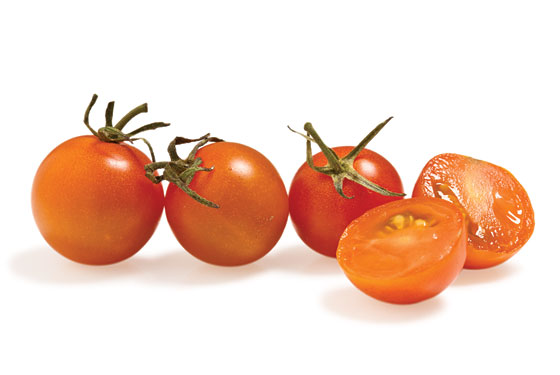
The Sweetest Cherry
By Rob Patronite & Robin Raisfeld
Cherry tomatoes are the M&M’s of the tomato world—compulsively edible, and, at their best, nearly as sweet. And when it comes to cherries, the Sun Gold variety, a popular hybrid developed in Japan, effortlessly dominates. Off the charts in sugar and acid, it swept the top spots in our undercard match, a “dessert course” to the main event. Eckerton Hill’s “amazing” Sun Golds took first place, followed by Keith’s Farm’s, with S. & S.O.’s and Windfall’s tying for third. Avid grower Goldman, in particular, was besotted with Windfall’s juicy little flavor bombs, which she nibbled contemplatively, scrutinized for color (some pink at the top and bottom made her question their classification), and rated as “excellent.” She was so taken with them, in fact (Sun Gold or no), that she asked if she could pocket two to take home—“for the seeds,” she explained, in the manner of a true tomato obsessive. “I have no shame.”
Tuesday, July 20, 2010
Illuminating the Small Farms' Struggle for Survival

Slowed Food Revolution
Obama seeks to boost demand for organic food but doesn't offer meaningful support for the people who grow it.
Morse Pitts has been cultivating the same land in New York's Hudson Valley for 30 years. His operation, Windfall Farms, is the very picture of local, sustainable agriculture. From early spring to late fall, the farm's 15 acres are luxuriant with snap peas, squash, mint, kale, and Swiss chard. Its greenhouses burst with sun gold tomatoes and an array of baby greens. Pitts, who is in his 50s and is tall with gray hair, doesn't use chemical fertilizers or pesticides or any genetically modified seeds. He cultivates biodiversity, not just vegetables.
Twice a week, he hauls his produce 65 miles south to Manhattan to sell at the lucrative Union Square farmers market. His converted school bus runs on biodiesel he makes from used vegetable oil, which he is also trying to use to power his greenhouses. Pitts does a brisk trade; demand for his produce is high, and the way he farms is increasingly valued. Since the mid-1990s the number of farmers markets has shot up 300 percent, and the organic sector has seen annual double-digit expansion.
But despite having no mortgage debt (he inherited the place), a ready market, and loyal customers, Pitts wants to leave his farm. His town recently rezoned the area as industrial, and if he wants to cultivate soil that's not surrounded by industry and its attendant potential for water and air pollution, he has to move. The problem is, he can't afford to.
Aside from the standard instability farmers must endure -- bad weather, pests, disease, and the vagaries of the market -- holistic and organic growers face great but often overlooked economic hardship. They must shoulder far higher production costs than their conventional counterparts when it comes to everything from laborers to land. Without meaningful support from the U.S. Department of Agriculture, their longevity hangs in the balance. In the meantime, the USDA showers billions on industrial agriculture. Growers who've gone the chemical, mechanized route have ready access to reasonable loans, direct subsidy payments to get through tough years, and crop insurance, plus robust research, marketing, and distribution resources. Whether organic and holistic growers raise crops, like Pitts does, or grass-fed, free-range livestock, they must contend with circumstances made harder by a USDA rigged to favor industrial agriculture and factory food.
Heather Rogers is the author of Green Gone Wrong: How Our Economy Is Undermining the Environmental Revolution and a senior fellow at Demos.
Friday, July 16, 2010
Hindsight is Twenty-Twenty

Our research on the comparison between till and no till farming continues here at Windfall. Much has been learned so far. First of all, don’t assume that just because you have some grand plan in mind it will unfold as you expect. Second, try to anticipate obstacles before they happen. Third, things somehow seem to work out.
As you may know, timing is key in life. If you don’t get something done at the right time, you may lose your opportunity to make it work. That is especially true in the world of farming. Things need to happen when they need to happen. Of course there’s wiggle room, but you don’t want to push it. So when a key piece of equipment (a roller/crimper) for our research plots decided that it didn’t want to work when we needed it, or when the pepper plants that were specifically for the research got planted in another area by mistake, or when we didn’t have any irrigation set up to water the newly planted plants my initial reaction wasn’t exactly optimistic. We probably should have tested out the roller/crimper before we needed to use it. The pepper plants should have had a sign on them explaining they were set aside for a specific use. Relying on the weather forecast that promised rain but didn’t deliver might have been a bit hopeful. Should have, could have, would have.
Fortunately, equipment was repaired, more pepper plants were found, and make shift irrigation was arranged. Big sigh of relief. Even though some things didn't work out as planned, many things did - like Hubert flame weeding one of the rows. Check it out.
Now we are past the initial implementation stages and dealing with maintenance. There will continue to be setbacks, but somehow it will all work out.
Thursday, June 24, 2010
Astor Center Celebrates All Things Herring
Nasturtium blossoms are prolific at Windfall these days. WD50 took advantage of this, by pureeing pounds of our flowers into nasturtium gazpacho. While we like the blossoms for their flavor and beauty in our salad, we thought this was pretty interesting . . .

Astor Center Celebrates All Things Herring
Friday, June 18, 2010
Our Newest Farm Residents
 Reported on our Facebook page:
These are temporary "nuke" hives. We will have to transfer the comb and bees to their permanent hives during the next few days. Fun!
Tuesday, May 4, 2010
Windfall greens on Healthy Happy Life blog

Windfall greens photographed over at the Healthy Happy Life blog.
For photos look at Greenmarket NYC: Union Square photos, faves, tips.
Thursday, April 29, 2010
Growing and Learning
 Windfall Farms has always been interested in experimenting with new methods for accomplishing our goal of providing quality produce with minimal impact to the environment. For example, we currently make biodiesel at the farm (from used cooking oil we pick up at restaurants in the city) to power our tractors, market buses, and small machinery. However, not all endeavors (even if they are embarked upon with the best intentions) turn out to be something economically or practically feasible.
 That is why we were very excited when one of our employees applied for and received a grant from SARE (Sustainable Agriculture Research and Education, www.sare.org) to research and compare different methods of growing crops without plowing or tilling the soil. There have been ample studies on the positive environmental impacts associated with the no-till system (http://attra.ncat.org/attra-pub/PDF/consertill.pdf, http://attra.ncat.org/downloads/notill_veg.doc, http://www.ag.ohio-state.edu/~news/story.php?id=2007) such as the reduction of soil erosion, conservation and improvement of water quality, storing more carbon in the soil, and reduced compaction. Unfortunately, a large portion of the farms utilizing no-till methods do so in conjunction with herbicide applications.
For those of you familiar with Windfall Farms, you know that we follow a strict "no" rule (no herbicides, no pesticides, no insecticides, no fungicides, no chemical fertilizers) when it comes to our philosophy on farming. During the 2010 growing season we will be setting up test plots to determine whether tilling or using the organic no-till method under varying circumstances will provide us with a clear picture of the most economical and environmentally sound system for a small farm in the Northeast. Right now we are mostly in the planning stages but a cover crop of winter rye was planted in the fall and is rapidly growing in the back field (see picture above) where the research will occur. So stay posted for updates, we'll keep you informed as we move along with the experiment.
Friday, April 23, 2010
6 new ducklings and 6 baby chicks
While it isn't clear that our ducks (6 acquired last year, 6 more this week) will ever yield any profitable gain, quantified in accounting terms, somehow their undeniable adorableness is indispensable now that it is apparent. It would seem that they pay for their keep in dividends of entertainment factor. We can't resist singing their praises just a bit . . .
As if it isn't enough that as baby ducklings they have little beaks and dark little sweetly shaped eyes and funny little webbed feet and tiny little wings sticking out at their sides, they are also FLUFFY!!!!!!!!!! Not feathery, not fuzzy, but utterly fluffy . . . nearly furry. It's either crazy or ridiculous how cute they really are. Then, they grow-up and exhibit behaviors like always following each other in a line and seemingly discussing things as they ponder where they might go next. They are lovable in the extreme!!!!!
Monday, April 12, 2010
Green Gone Wrong

Windfall is featured in "Green Gone Wrong," the new investigative analysis of consumerist solutions to our environmental woes, written by Heather Rogers. The book takes a critical, on-the-ground look at market-based solutions to climate change and other grave ecological ills.
Join Heather (and us) for the NYC launch on Monday, April 19th at 7PM at Bluestockings Bookstore (172 Allen Street, btwn Stanton and Rivington, on the Lower East Side).
Friday, April 9, 2010
Ramps Coming, Garlic Going

This just in: A sizable patch of Ramps (a.k.a. wild leeks) were found today in an uncultivated field at Windfall! We will have just a handful tomorrow, but expect more in the coming weeks.
Also, there is still plenty of last season's Music Garlic from Stillpoint Farms of Amenia, NY. As it is late in the storage season, we don't expect all of it to be perfect. Therefore, we are selling bulbs two for a dollar and smaller selections three for a dollar. This way you are guaranteed at least one good head. And the good ones aren't just good, they have great flavor.
Subscribe to:
Posts (Atom)